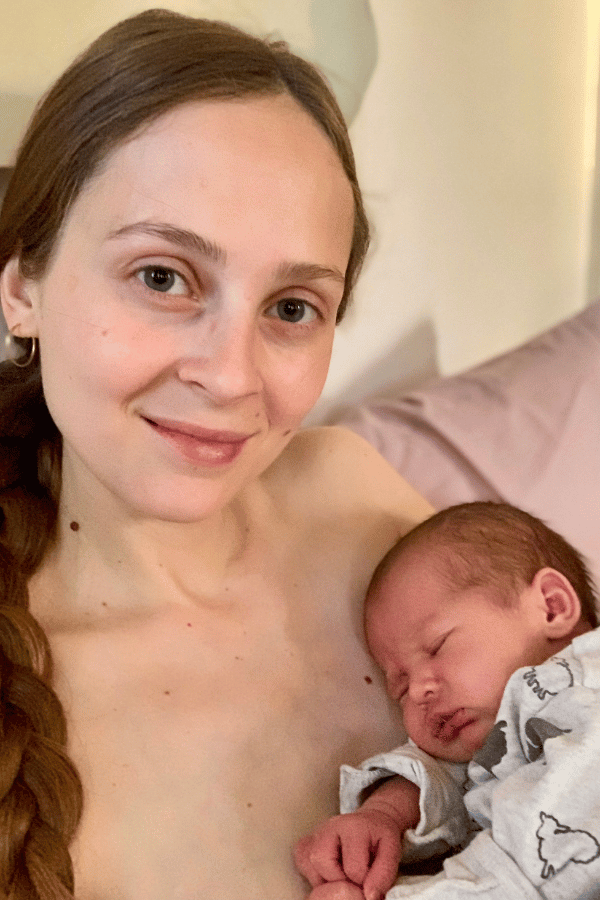
As a breastfeeding mom, there is always a possibility of me being oblivious of the first time I ovulate and getting pregnant before my first bleed. Understanding how important preconception health is for the health of my future baby, especially for first trimester development, I have made lifestyle changes that not only support me and a new baby in the case I get pregnant, but that also support my health right now as my body replenishes from my previous pregnancy, and as I breastfeed two children.

#1 I Eat Nourishing Food
Nourishing food directly supports our health. What we eat either kills us or heals us. You may be eating enough calories but if it’s not nourishing your body, your body will be deprived of nutrients that are essential for a healthy pregnancy and baby. Junk food can be toxic to the body & cause more harm than good.
Not consuming enough minerals can cause the body to not absorb & utilize the nutrients from our food, leading to deficiencies and malnutrition.
Nourishing food provides necessary nutrients that supports maternal health in pregnancy and breastfeeding.
Maternal health influences the appropriate utilization, storage and conversion of nutrients to the placenta and baby, which eventually affects the lifelong health for both mother and her baby.
Maternal nutrition must be optimized BEFORE conception, so that the environment is ready to support early development of the baby and placenta, especially since baby’s major organs develop in the first trimester.
Diet is the one of the most important factor that determines the quality and outcome of a pregnancy and birth.
My favorite resource for education about nourishing food is the Weston A Price Foundation. Check out my resources page for more resources on a nourishing diet.

#2 I Eat Enough Food, Aiming For At Least 80 Grams Of Protein
Protein is is a vital nutrient because it is responsible for so many bodily functions, such as the formation of hormones, regulation of the acid-alkaline balance of tissues and blood, transporting fat and cholesterol through the body, the process of blood clotting, and making up a significant portion of the body.
In pregnancy, protein has one of the most important jobs: blood volume expansion.
Your blood volume NEEDS to expand 50-60% in pregnancy to sustain your baby and you, to prevent preeclampsia, and to protect you from the effects of postpartum blood loss.
Your blood volume CANNOT expand without PROTEIN!
Your liver creates albumin from the protein that you eat & albumin facilitates blood volume expansion. Check out my reel on preventing preeclampsia to learn more.
The pregnant body undergoes blood volume expansion in the first trimester. This is why I aim for 80-120 grams of protein daily, which is sufficient for most people.
It’s also important to eat enough so that the protein that you consume isn’t being used up for energy instead of albumin production.
If you’re eating enough protein but not enough of other macronutrients, and calories in general, your body will burn protein for energy and you’ll end up having insufficient amount of protein, leading to insufficient amount of albumin, and ultimately, insufficient blood volume expansion.
How do I hit 80 grams of protein daily, especially without supplementation?
- I always eat protein in every meal and snack.
- I like to drink protein. Before my dairy intolerant baby was born, I was drinking 3-4 cups of raw milk daily… on its own, hot chocolate, or in food, like oatmeal. I drink lots of bone broth.
- I like to cook with bone broth as much as possible. Any savory recipe that calls for water, I replace with bone broth.
Each day, I typically eat 3-4 eggs, a couple sausage links, chicken, beef, grains cooked with bone broth, 1-2 cups of bone broth. I usually go over 80 grams of protein naturally. I don’t force in protein. But if I’m not eating enough protein, I’ll feel it… particularly lack of energy and satiety.
There are more great options for protein, such as fish and yogurt.
The Brewer’s Diet is a great resource for helping to reach sufficient protein intake daily.

#3 I Minimize My Exposure To Toxins:
Toxins are everywhere. They are in water, in our air, in our food, in our clothes, in our furniture, in our houses, and so on. But we do have some control over our exposure.
Breathing or swallowing chemicals causes them to enter the bloodstream and pass to baby via placenta in pregnancy and through breastmilk in postpartum.
Exposure to toxins can cause infertility, miscarriages and stillbirth. It can cause perinatal complications for mom and baby, such as preterm birth and low birth weight. It can cause neurodevelopmental delay in babies, such as autism and ADHD. Ir can cause fertility and hormonal issues in baby. It can also cause childhood and adult cancer.
Exposure to heavy metals can harm lung development, leading to respiratory issues and asthma, and immune system development. It can limit baby’s growth, resulting in preterm birth. It can also increase the risk for gestational diabetes for mom.
How Do I Minimize My Exposure To Toxins?
- I reduce my exposure to toxins by sweeping, dusting and vacuuming frequently, and opening the windows frequently.
- We don’t use any pesticides or herbicides.
- We don’t use any toxic cleaning products or personal hygiene products.
- We don’t use any synthetic fragrance in our home.
- We filter our water.
- We are mindful of plastic, silicone, and aluminum use.
- Certain foods are higher in heavy metals or pesticides so I buy organic, such as oats, or soak produce in water with baking soda or vinegar.
- If you live where the air is extremely polluted, it may be wise to invest into an air purifier.
How do you not stress out about toxins?
As you work to reduce toxins in your life, keep in mind that your body is constantly filtering and detoxing. You have organs that filter and detox and your body physiologically facilitates this. So don’t stress about your exposure to toxins as you take the time to switch out products. Stress impacts our ability to detox and hinders physiological processes. It is the biggest toxin.
It is nearly impossible to live a completely toxin free life so control what makes sense for your lifestyle and take care of your body. You can rest assured that your body will take care of the rest of your exposure to toxins. Your body is wise and is working for you.
If your body needs extra support to detox, incorporate exercise if applicable, sauna, baths… basically anything to sweat. Do gentle lymph massages. Support your mineral stores through nourishing food and blood sugar regulation. Dandelion is a great herb that supports the liver and its ability to filter. Earthley Wellness has a liver love tincture that helps support the liver as it filters out toxins. Use code ariannatomak_10 for 10% off your first purchase.
There are many great guides on a less toxic or non toxic home and I have them listed in my resources page.

#4 I Continually Reduce Stress
I’m not saying that supplements, products, or educational courses are bad. I’m saying we shouldn’t count on these things as a quick fix and try to outsmart our body. It doesn’t work that way. Save your money and FIRST, start implementing simple steps today in minimizing and managing stress. Then supplement as needed and as it makes sense.
Stress is the biggest killer. Stress depletes our mineral stores, which then negatively affects our health.
The first mineral to go under stress is magnesium, which then causes imbalances in all other minerals and physiological processes. Stress also depletes copper, which then affects our iron recycling system, leading to stored iron in our tissues, which ultimately causes a lack of energy.
Stress affects every area of our lives. Stress can cause a myriad of prenatal health problems and labor complications.
But it’s not possible to live 100% stress free. So it’s important to reduce stress and remove stressors as much as possible and as much as it makes sense individually for you.
It’s also important to support our body adequately through stress that isn’t possible to remove.
What are some stressors?
- Overpacked schedule
- Not enough or low quality sleep
- Toxins (see previous reel)
- Not eating enough
- Not eating nutritious food
- Toxic relationships
- Over-exercising or exercising in a stressed, depleted state
- Unhealed trauma
- Chronic illness
- Deadlines, unrealistic expectations, keeping up with the news, anxiety-inducing entertainment, financial stress etc… anything that put us under stress or in fight or flight.
How do we reduce stress?
Some ways I continually reduce stress:
- Eating enough, eating frequently, eating balanced meals, eating nourishing, mineral-rich food
- Reducing toxin exposure
- Sleeping enough and sleeping well
- Spending time seeking God in prayer and the Word
- Going outside, breathing fresh air, sun bathing, earthing
- Placing my fears, worries, burdens into God’s hands and trusting Him
- Dancing, playing piano, singing, organizing, cleaning, learning, reading, warm baths
- Talking with loved ones and spending time with loved ones
- Deep breathing
- Living intentionally, cultivating a heart full of gratitude, and laughing a lot
- Cultivating a good relationship with my husband and children
- Having strong boundaries with difficult or toxic people
- Not committing to too many responsibilities

I love this quote:
“The foundations of health are simply stepping into how God designed us to live. Living alongside community, eating real food, moving our bodies, immersing ourselves in creation.
Feeling overwhelmed, friend?
Go back to the basics.”
@awholehealthlife on Instagram