Before the 1930’s, breastfeeding was essential for babies to survive. Traditional nomadic hunter-gatherer societies spaced births at least 4 years apart. As countries industrialized, children were spaced no less than 2 years apart. From the 1930’s and 40’s when formula grew popular and became widely implemented, ecological breastfeeding began to decline. Early postpartum ovulation increased and child-spacing shortened to about 1 year.
How does ecological breastfeeding prevent fertility?
In women who ecologically breastfeed, prolactin levels stay elevated, with spikes of increased secretion during and following suckling. This naturally prevents ovulation and menstruation.
Ecological breastfeeding is God’s intended design for mothers to not only nourish their children to the highest quality and capacity, but to also restore their body before the next pregnancy. This allows the next baby to receive the same amount of nutrition as the first baby. In simpler terms, ecological breastfeeding gives your body time to heal and restore itself before the next pregnancy, while also nourishing your baby.
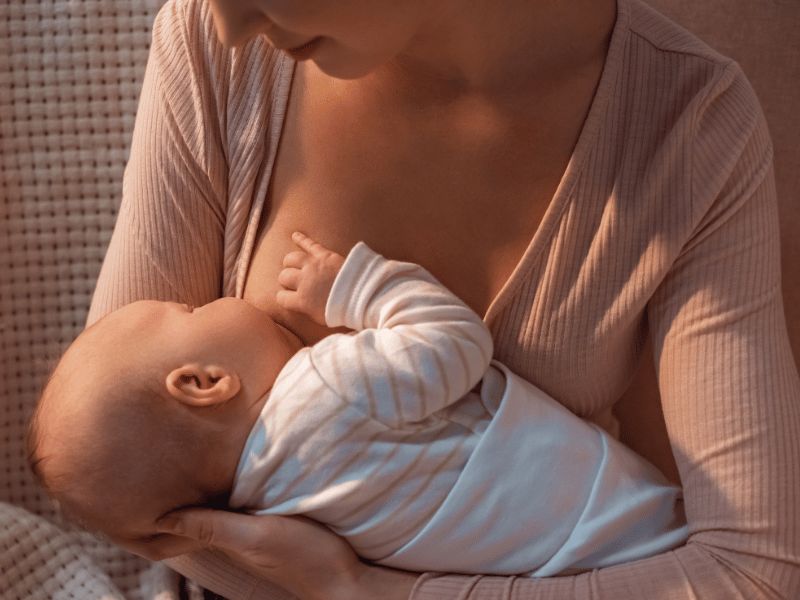
How to ecologically breastfeed
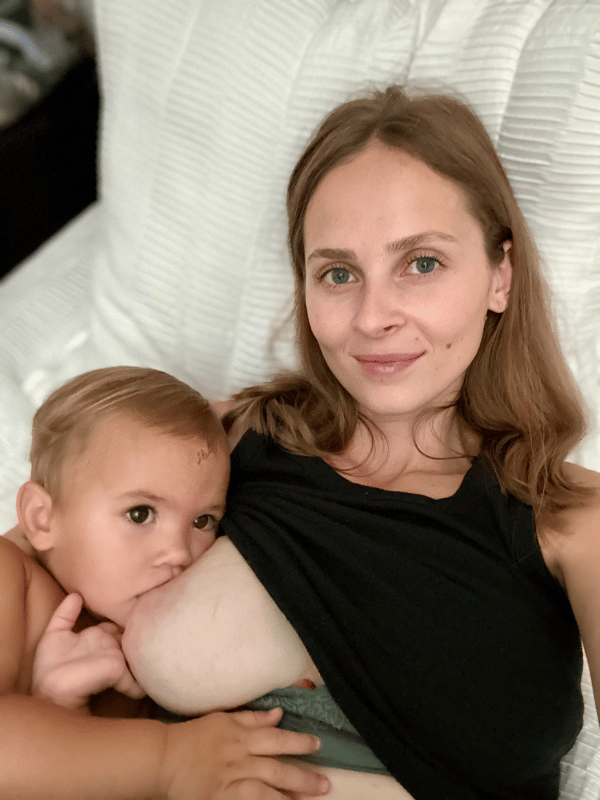
Ecological breastfeeding is an intuitive and primal way of breastfeeding, where you:
- Breastfeed on demand day and night
- Don’t sleep train
- Co-sleep/bed-share with baby
- Don’t use any pacifiers or bottles
- Gradually introduce small amounts of solid foods when all signs of readiness are met
- Continue to breastfeed as the primary food source for at least one year
Natural Child Spacing
Fertility can return before your period returns, but women who slowly reduce the frequency of breastfeeding by gradually introducing only small amounts of other foods over a period of months are likely to have 1 or 2 infertile menstrual cycles.
Non-breastfeeding mothers are infertile for only a few weeks, but ecologically breastfeeding mothers experience prolonged lactational amenorrhea (PLA), which is lack of period due to prolonged breastfeeding, for about 9-18 months, depending primarily on how often the baby suckles.
Postpartum amenorrhea can give over 98% contraceptive protection to breastfeeding mothers in the first 6 months postpartum, and many women who continue to ecologically breastfeed may still have up to 1-2 years of good contraceptive protection. Non-breastfeeding mothers are typically infertile for only a few weeks, but ecologically breastfeeding mothers usually don’t have their period return until 9-18 months postpartum, depending primarily on how often their baby nurses.
Ecological breastfeeding gives the body time to fully heal and restore itself before the next pregnancy, while also nourishing the current baby.
In many less developed countries today, breastfeeding still prevents more pregnancies than all modern forms of birth control.
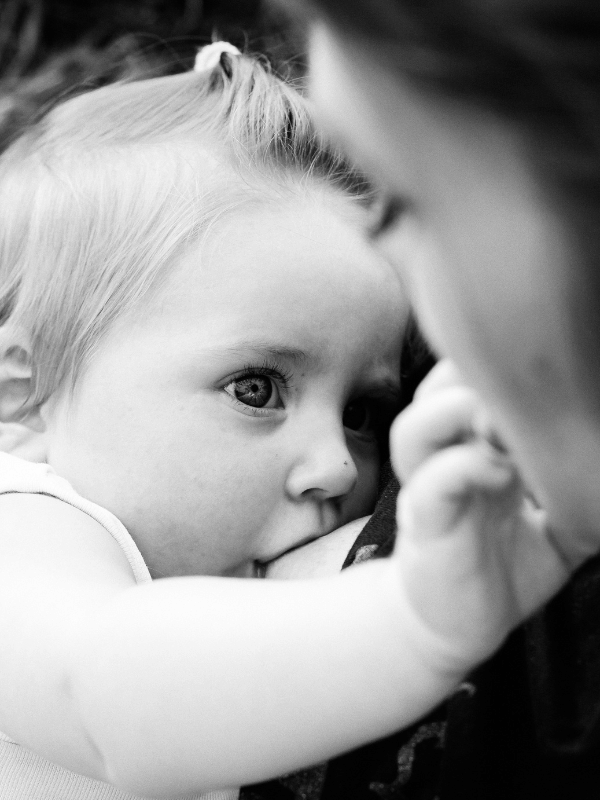
My ecological breastfeeding journey
I exclusively breastfed on demand during the first 8 months of my first daughter’s life. Once she had teeth coming in, I started to gradually introducing solids. I still breastfed her on demand but her need was less. At 15 months old, we were nursing 6-8 times in a 24 hours: 3-4 feeds at night and about 3-4 feeds during the day. This worked well for us.
The desire to have another baby came when my daughter was 4 months old. I didn’t have my period back and I knew I wasn’t fertile. As time passed and many friends who had their first babies after me became pregnant again, I began to grow frustrated.
Then I found out about ecological breastfeeding and suddenly everything made sense. The wait to become pregnant became worthwhile.
I realized that although I was so eager to have another child, I needed to be respectful of God’s design, which protects me, my baby, and my future baby.
My period returned at 15 months postpartum and it took a year to get pregnant with our second child. I continued to nurse during that time, and even dry nursed throughout the majority of my pregnancy. You can read more about my journey here.
I am almost 18 months postpartum after having my second child and my period still is yet to return.
PMID: 12311528
PMID: 3042247
PMID: 3549114
PMID: 8489757